
sharp and suspicious lisps review from soft communication. i love it.
I swear I heard a nightingale
"Dear friends,
1. No lie, I requested a copy of The Vain, The Modest, and The Dead by The Lisps because there is someone in the band named César Alvarez and this indie rock Latina likes to seek other indie rock Latins*. Of course there's always the slight possibility that the name's a weird hipster affectation (Hispanic is the new black!) and his real moniker is Joe Smithsonberry. I hope not. Dedos crusados."
read more....
I think I should start a serious art rock band called
"The Affectations of Joe Smithsonberry"
11.15.2006

11.14.2006
The Lisps on the Associated Press. Whoa.
Collaborating on stage and at home 

Collaborating on stage and at home
Is it possible to be in a rock band, live together and come out unscathed? SAMANTHA TUNIS gives it a whirl.
The Lisps. (AP Photo/HO/Courtesy of Samantha Tunis/Chad R. Nicholson)
Tuesday, 14 November, 2006, 19:05 EST, US
It might be everyone's secret fantasy to be in a rock 'n' roll band, but try starting one with your live-in boyfriend, and things really start to get complicated.
Mick Fleetwood of Fleetwood Mac, a band that included and subsequently led to the demise of two couples, once said that being in his band was like being in group therapy. The same could be said about The Mamas and The Papas, a band that despite its success broke up three years, several in-band affairs, countless reconciliations and one divorce later. The White Stripes continue to make beautiful music together, but their marriage fell apart.
All of which raises the question: is musical collaboration between a couple a relationship death-sentence?
Here's hoping not. For the last year, I have been in a band with my boyfriend. Our songs generally grow from the jungle of our one-room apartment in the South Bronx, which we share with a senile Dalmatian and a bipolar, tri-colored cat we call "Rumsfeld."
keep reading...11.13.2006
This nytimes article on Web 3.0 is really amazing.
"Their goal is to add a layer of meaning on top of the existing Web that would make it less of a catalog and more of a guide — and even provide the foundation for systems that can reason in a human fashion. That level of artificial intelligence, with machines doing the thinking instead of simply following commands, has eluded researchers for more than half a century."
It reminds me of Erik Davis' essay about the esoteric roots of the phonograph, he desribes McLuhan's idea of electronics as the "outering" of our nervous system.
" 'the telegraph sparked the electric re-tribalization of the West', a long slide into an immersive electronic sea of mythic partisipation and collective resonance. But McLuhan also saw this 'outering' as the technological roots of the age of anxiety. 'To put one's nerves outside,' he wrote, is to initiate a situation - if not a concept -of dread.' "
Is the birth of the Semantic Web the "outering" of our global consciousness/intelligence to go along with our "outered" nervous system which has weathered harsh reality for over 100 years? Maybe now our external nervous system will have better filters, or skin if you will.
To be honest, after getting a new computer which was about 5 times faster than my old computer I've experienced a tangible alteration i the way i think, absorb knowledge, and complete tasks. Weird. It's true though.
listening to: Perro Del Mar on Hype Machine.
"Their goal is to add a layer of meaning on top of the existing Web that would make it less of a catalog and more of a guide — and even provide the foundation for systems that can reason in a human fashion. That level of artificial intelligence, with machines doing the thinking instead of simply following commands, has eluded researchers for more than half a century."
It reminds me of Erik Davis' essay about the esoteric roots of the phonograph, he desribes McLuhan's idea of electronics as the "outering" of our nervous system.
" 'the telegraph sparked the electric re-tribalization of the West', a long slide into an immersive electronic sea of mythic partisipation and collective resonance. But McLuhan also saw this 'outering' as the technological roots of the age of anxiety. 'To put one's nerves outside,' he wrote, is to initiate a situation - if not a concept -of dread.' "
Is the birth of the Semantic Web the "outering" of our global consciousness/intelligence to go along with our "outered" nervous system which has weathered harsh reality for over 100 years? Maybe now our external nervous system will have better filters, or skin if you will.
To be honest, after getting a new computer which was about 5 times faster than my old computer I've experienced a tangible alteration i the way i think, absorb knowledge, and complete tasks. Weird. It's true though.
listening to: Perro Del Mar on Hype Machine.
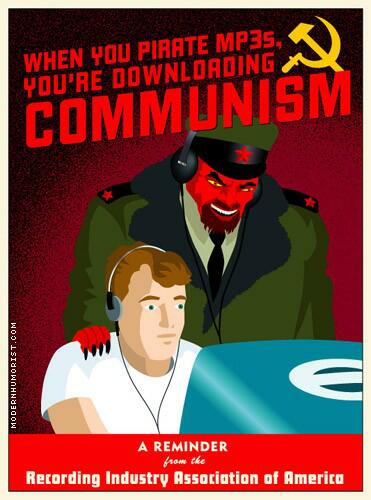
 why zune is dumb:
from nytimes: "Songs take about 15 seconds to transfer, but transferred songs can be played only three times in three days before they disappear,"
music is free now. Why would you spend money on something that deletes your music?
"Would the Zune ever be able to connect to the Internet? Could someone walk into a Starbucks and use the connection there to download a song? Mr. Lee answered without hesitation: 'Probably, one day.'"
oh brother
Another example of a technology refusing to accept true viral-ness, because they want too much control and they think that their restrictions will get them money. here are other good examples of that kind of behavior:
friendster
new york "Times Select"
and I'm sorry but people need to stop writing this sentence: "blah blah blah due to the popularity of social networking sites like MySpace blah blah blah"
11.12.2006
I've gotta admit Girl Talk's album Night Ripper is the brilliant and delicious party pop version of what I've been trying to come up with on my ipods. I'm bummed I missed his CMJ show.
here's a great review
and check it out at hype machine
here's a great review
and check it out at hype machine
11.08.2006
from Swen's blog:
Big labels are f*cked, and DRM is dead - Peter Jenner
theregister.co.uk: ""Few people know the music industry better than Peter Jenner. Pink Floyd's first manager, who subsequently managed Syd Barrett's solo career, Jenner has also looked after T.Rex, The Clash, Ian Dury, Disposable Heroes and Billy Bragg - who he manages today. He's also secretary general of the International Music Managers Forum.
The major four music labels today are "fucked", he says. Digital music pricing has been a scam where the consumer pays for manufacturing, distribution, and does all the work - and still has to pay more. Labels should outsource everything except finance and licensing." More
Big labels are f*cked, and DRM is dead - Peter Jenner
theregister.co.uk: ""Few people know the music industry better than Peter Jenner. Pink Floyd's first manager, who subsequently managed Syd Barrett's solo career, Jenner has also looked after T.Rex, The Clash, Ian Dury, Disposable Heroes and Billy Bragg - who he manages today. He's also secretary general of the International Music Managers Forum.
The major four music labels today are "fucked", he says. Digital music pricing has been a scam where the consumer pays for manufacturing, distribution, and does all the work - and still has to pay more. Labels should outsource everything except finance and licensing." More
Miya Masaoka, George Lewis, Marina Rosenfeld, Ikue Mori at The Stone. 11/7/06
this was a brilliant set. I don't have a camera right now so these scribbles will function as my visual aid.
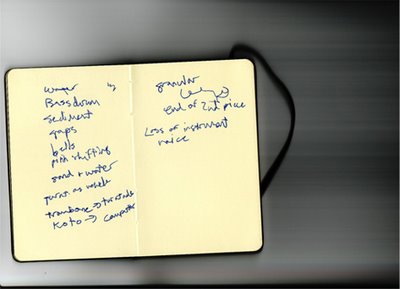
Things that I heard and thought about during this concert:
1. Water
2. Sediment
3. sand+water=beach
4. gaps
5. bells
6. max/msp pitch roller coaster sound=I think i don't like any more.
7. So much of taste in terms of non-representational or identifiable electronic sound
has to do with the sound's
a) mystery
b) humor
c) relationship the sounds YOU use
d)
e)what you can figure out about the sound
f) etc.
8. Marina's turntable seemed so locomotive. While everyone's else's sounds were in a kind of atmospheric or dream realm she was doing the work of the turbine or the wheel. I've never thought of a turntable as a vehicle but it truly seemed that way during the set.
9. George lewis played:computer/trombone Marina Rosenfeld: turntable Ikue Mori: Computer/footpedal, and Miya Masaoka: Koto/computer.
10. No one seemed like they were trying to prove anything which was nice
11. there was a lot of granular going on. see #7
12. The second and 3rd pieces were much more playful.
13. something so important in jazz and some realms of improvised music is the voice of the performer. Where as here because everyone is going through the same mixer the premium seems to be on merging your voice completely with others. Marina's voice was identifiable almost always because of the crackle of her dub plates and her visible manipulation of the records, as was Miya's when she played koto. If you wanted to know what Ikue Mori was doing you had to watch her foot, which only gave you a tiny clue. And George's sound was largely a mystery except the handful of times he picked up the trombone, and when he put on a sample of a lady singing and everyone looked at him.
14. brilliant.
15. maybe all the sediment was underlined by the record crackle. I got the feeling much of the granulized water was coming from Ikue Mori and every one was using string sounds to cushion the koto.
16. how do you write about music like this?
Miya Masaoka is Curating the Stone in November
this was a brilliant set. I don't have a camera right now so these scribbles will function as my visual aid.

Things that I heard and thought about during this concert:
1. Water
2. Sediment
3. sand+water=beach
4. gaps
5. bells
6. max/msp pitch roller coaster sound=I think i don't like any more.
7. So much of taste in terms of non-representational or identifiable electronic sound
has to do with the sound's
a) mystery
b) humor
c) relationship the sounds YOU use
d)
e)what you can figure out about the sound
f) etc.
8. Marina's turntable seemed so locomotive. While everyone's else's sounds were in a kind of atmospheric or dream realm she was doing the work of the turbine or the wheel. I've never thought of a turntable as a vehicle but it truly seemed that way during the set.
9. George lewis played:computer/trombone Marina Rosenfeld: turntable Ikue Mori: Computer/footpedal, and Miya Masaoka: Koto/computer.
10. No one seemed like they were trying to prove anything which was nice
11. there was a lot of granular going on. see #7
12. The second and 3rd pieces were much more playful.
13. something so important in jazz and some realms of improvised music is the voice of the performer. Where as here because everyone is going through the same mixer the premium seems to be on merging your voice completely with others. Marina's voice was identifiable almost always because of the crackle of her dub plates and her visible manipulation of the records, as was Miya's when she played koto. If you wanted to know what Ikue Mori was doing you had to watch her foot, which only gave you a tiny clue. And George's sound was largely a mystery except the handful of times he picked up the trombone, and when he put on a sample of a lady singing and everyone looked at him.
14. brilliant.
15. maybe all the sediment was underlined by the record crackle. I got the feeling much of the granulized water was coming from Ikue Mori and every one was using string sounds to cushion the koto.
16. how do you write about music like this?
Miya Masaoka is Curating the Stone in November
11.07.2006

Podcast:
[Mp3] César Alvarez - Live iPod Mashup #1 31'01"
mixed live on 9/27/06
Live iPod mashups. It’s really simple: I have 2 iPods running simultaneously on shuffle drawing from the entire library. And through layering, volume, shuttling, manual looping, skipping, etc I create real time mash-ups and/or plunderphonics. Sometimes songs are recognizable and sometimes they become cacophonous, ambient, mangled, or perfect composites. After the performance I go back on the iPod and note which songs were prominently featured. In this way the “playlist” turns more into a retroactive list of ingredients.
What’s so brilliant about mp3 players is that the playhead can jump from genre to genre in a split second, making rapid choices that I never could have imagined. Music is free now. Not only does it not cost anything but it’s free from all of the boundaries that localize recordings within their own genres. I feel like the main thing keeping musical genres in tact are people’s nostalgia for the way we used to experience music. Music is free now. It’s everywhere. It’s liquid.
"Ingredient List" for podcast #1
(This list is not in exact order and only contains prominently featured tracks)
Sueltame Dark Latin Groove
A Baby for Pree - Jeff Mangum
Misery is a Butterfly - Blonde Redhead
Don't Go Down - Elliott Smith
Teeth in the Grass - Iron and Wine
Le Le Low - Hot Hot heat
Graveyard - Jeffery Lewis
California Stars - Wilco & Billy Bragg
Iowa - Dar Williams
Body Below - Mirah
Damn Damn Leash - Be Your Own Pet
You know so well - Sondre Lerche
Cracklin Water - Giant Sand
Fame - David Bowie
River Boat Fantasy - David Wilcox
The Build Up - Kings of convenience
The Legionnaire's Lament - The Decemberists
Father Blues - Olu Dara
The Anchor Song - Bjork
The Widow - The Mars Volta
Jersey - Dibs
Cosmiz Debris - Frank Zappa
Paper Tiger - Beck
From the Faucet fell an Apostatic Drop - Audio Ovni
Que Sera - Unknown
Big Pimpin'- Jay-Z
Damn Damn Leash - Be Your own Pet
Poor Edward - Tom Waits
Pica Luna - Arab Strap
Flamingo - Duke Ellington
Are you Ready for the Country -Neil Young
I forgot - The Moldy Peaches
Mean Mr. Mustard - The Beatles
The Needle and the Damage Done - Neil Young
La Bamba - Richie Valens
Smoked - The Crystal Method
Virgin With a Memory - Destroyer
Street Life - Roxy Music
My Baby Just Cares for Me - Nina Simone
[Mp3] César Alvarez - Live iPod Mashup #1 31'01"
mixed live on 9/27/06
Live iPod mashups. It’s really simple: I have 2 iPods running simultaneously on shuffle drawing from the entire library. And through layering, volume, shuttling, manual looping, skipping, etc I create real time mash-ups and/or plunderphonics. Sometimes songs are recognizable and sometimes they become cacophonous, ambient, mangled, or perfect composites. After the performance I go back on the iPod and note which songs were prominently featured. In this way the “playlist” turns more into a retroactive list of ingredients.
What’s so brilliant about mp3 players is that the playhead can jump from genre to genre in a split second, making rapid choices that I never could have imagined. Music is free now. Not only does it not cost anything but it’s free from all of the boundaries that localize recordings within their own genres. I feel like the main thing keeping musical genres in tact are people’s nostalgia for the way we used to experience music. Music is free now. It’s everywhere. It’s liquid.
"Ingredient List" for podcast #1
(This list is not in exact order and only contains prominently featured tracks)
Sueltame Dark Latin Groove
A Baby for Pree - Jeff Mangum
Misery is a Butterfly - Blonde Redhead
Don't Go Down - Elliott Smith
Teeth in the Grass - Iron and Wine
Le Le Low - Hot Hot heat
Graveyard - Jeffery Lewis
California Stars - Wilco & Billy Bragg
Iowa - Dar Williams
Body Below - Mirah
Damn Damn Leash - Be Your Own Pet
You know so well - Sondre Lerche
Cracklin Water - Giant Sand
Fame - David Bowie
River Boat Fantasy - David Wilcox
The Build Up - Kings of convenience
The Legionnaire's Lament - The Decemberists
Father Blues - Olu Dara
The Anchor Song - Bjork
The Widow - The Mars Volta
Jersey - Dibs
Cosmiz Debris - Frank Zappa
Paper Tiger - Beck
From the Faucet fell an Apostatic Drop - Audio Ovni
Que Sera - Unknown
Big Pimpin'- Jay-Z
Damn Damn Leash - Be Your own Pet
Poor Edward - Tom Waits
Pica Luna - Arab Strap
Flamingo - Duke Ellington
Are you Ready for the Country -Neil Young
I forgot - The Moldy Peaches
Mean Mr. Mustard - The Beatles
The Needle and the Damage Done - Neil Young
La Bamba - Richie Valens
Smoked - The Crystal Method
Virgin With a Memory - Destroyer
Street Life - Roxy Music
My Baby Just Cares for Me - Nina Simone
11.06.2006
11.02.2006
Music is Free Now. And here's why.
The New York Times just posted
1) Another article about the "1000 bands at CMJ"
2) Another anemic 2-line treatment of blog culture and the changes brought on by digital music.
3) A (somewhat refreshing) cynical take on the glut of indie rock buzz bands, without a lot of insight on what is really going on.
This article gives me a perfect chance to try and explain why I started this blog.
read the whole article here:
In a World of Cacophony, Experience for Sharing
By KELEFA SANNEH
Published: November 2, 2006
here's an excerpt:
"And if you’d like to sample their music, all you need is an Internet connection and 20 minutes. Aggregator sites like elbo.ws (which publishes a useful blog popularity chart) make it easy to figure out exactly how many blog links a band has; Myspace makes it easy (and free) to hear four songs from just about any band at CMJ. At this festival indie-rock looks less like a wide-open space and more like a well-organized market.
It wasn’t supposed to turn out like this. Only a few years ago, the Internet threatened to blur boundaries of genre and culture making it easy for listeners to fill their iPods with whatever caught their fancy.
But listeners of all sorts like having what Mr. Christgau called a shared experience. That’s why the old monoculture flourished in the first place. And today’s indie-rock fans have something that’s smaller yet similar: a mini-monoculture. That is, a robust infrastructure of Web sites and blogs, along with a (necessarily vague) consensus about what indie-rock sounds like."
Sanneh is assuming that all of the samey bands playing at CMJ are a mildly accurate reflection of what the people attending CMJ have on their iPods. He's also asserting the idea that indie rockers really just long to be part of a monoculture, which is why so much of the music sounds the same. While many of the bands at this festival and on myspace are painfully derivative and formulaic, I really think that's how it's always been and now we're just hearing these bands because the Internet has given interested parties free access to millions of them. The fact that there are so many buzz bands represents a change in the buzz not in the bands. I'd like to forward the idea that the "culture" people want to be a part of is the culture engendered by blogs of insider knowledge and insight into unknown bands, but also a genuine interest in original music. (There is also a creepy spectator sport aspect of "wanting to be there before they got famous" that hangs thick in the air on CMJ week.)
What I’m excited about is that now that so much more music is available I think people inevitably will get bored of themselves. I think that the more you listen the more originality you can tolerate. And the more you listen the more the derivative becomes apparent.
Music is free now. Because it's everywhere and buying it is a customary but voluntary activity. Music is free now because it's all on the same hard disk and each day leaving farther behind the stratifications that have dictated the business of music for centuries. Music isn't free for everyone and it's not that people aren't making tons of money on music and spending tons of money on music, it's that the old machinery is silly. And the new machinery is still spanking new, amazingly functional, and pretty happily anarchic. Additionally, what is right now insider knowledge is rapidly becoming common knowledge.
When Gutenberg printed his first Bible, he took what was the sole province of the select few, reading and interpreting religion, and gave it to many more. And at first very few people had access to printed material but at the technology spread it became, arguably, the single most transformative moment of it's millennium. The digital age will do that to mass media. It has given the power of mass dissemination of images, sounds and words to the world. The YouTube craze I think has completed (now with myspace, flickr, google, blogs, Mp3 blogs/aggregators etc.) the beginning stages of what will be and is a total reinvention of entertainment and information exchange.
It doesn't matter that so many of the videos on YouTube are boring videos of people's pets and rambling confessionals. At this stage it doesn't matter what it is, it matters what it will be. And the fact that CMJ is blowing up while tower records is closing down, means something. Coming back to the original point: It doesn't really matter that so many of the bands sound the same at CMJ, what matters is that CMJ is a gangly (if over-hyped, and hyper-commercialized) physical manifestation of the awkward beginning of a revolution in the way people experience music. (Pimples, conformity, boring indie rock yelps and all.) The monoculture is Internet culture not a specific brand of indie rock; they just happen to be early adopters. And indie rock in my definition doesn't refer to a sound it refers to kinds of venues. Most bands that call themselves "indie rock" would sell their souls to a major in a second. But I don't begrudge them because, while our musical goals don't coincide, they're still hand making their demos and hustling on myspace like everyone else.
The New York Times just posted
1) Another article about the "1000 bands at CMJ"
2) Another anemic 2-line treatment of blog culture and the changes brought on by digital music.
3) A (somewhat refreshing) cynical take on the glut of indie rock buzz bands, without a lot of insight on what is really going on.
This article gives me a perfect chance to try and explain why I started this blog.
read the whole article here:
In a World of Cacophony, Experience for Sharing
By KELEFA SANNEH
Published: November 2, 2006
here's an excerpt:
"And if you’d like to sample their music, all you need is an Internet connection and 20 minutes. Aggregator sites like elbo.ws (which publishes a useful blog popularity chart) make it easy to figure out exactly how many blog links a band has; Myspace makes it easy (and free) to hear four songs from just about any band at CMJ. At this festival indie-rock looks less like a wide-open space and more like a well-organized market.
It wasn’t supposed to turn out like this. Only a few years ago, the Internet threatened to blur boundaries of genre and culture making it easy for listeners to fill their iPods with whatever caught their fancy.
But listeners of all sorts like having what Mr. Christgau called a shared experience. That’s why the old monoculture flourished in the first place. And today’s indie-rock fans have something that’s smaller yet similar: a mini-monoculture. That is, a robust infrastructure of Web sites and blogs, along with a (necessarily vague) consensus about what indie-rock sounds like."
Sanneh is assuming that all of the samey bands playing at CMJ are a mildly accurate reflection of what the people attending CMJ have on their iPods. He's also asserting the idea that indie rockers really just long to be part of a monoculture, which is why so much of the music sounds the same. While many of the bands at this festival and on myspace are painfully derivative and formulaic, I really think that's how it's always been and now we're just hearing these bands because the Internet has given interested parties free access to millions of them. The fact that there are so many buzz bands represents a change in the buzz not in the bands. I'd like to forward the idea that the "culture" people want to be a part of is the culture engendered by blogs of insider knowledge and insight into unknown bands, but also a genuine interest in original music. (There is also a creepy spectator sport aspect of "wanting to be there before they got famous" that hangs thick in the air on CMJ week.)
What I’m excited about is that now that so much more music is available I think people inevitably will get bored of themselves. I think that the more you listen the more originality you can tolerate. And the more you listen the more the derivative becomes apparent.
Music is free now. Because it's everywhere and buying it is a customary but voluntary activity. Music is free now because it's all on the same hard disk and each day leaving farther behind the stratifications that have dictated the business of music for centuries. Music isn't free for everyone and it's not that people aren't making tons of money on music and spending tons of money on music, it's that the old machinery is silly. And the new machinery is still spanking new, amazingly functional, and pretty happily anarchic. Additionally, what is right now insider knowledge is rapidly becoming common knowledge.
When Gutenberg printed his first Bible, he took what was the sole province of the select few, reading and interpreting religion, and gave it to many more. And at first very few people had access to printed material but at the technology spread it became, arguably, the single most transformative moment of it's millennium. The digital age will do that to mass media. It has given the power of mass dissemination of images, sounds and words to the world. The YouTube craze I think has completed (now with myspace, flickr, google, blogs, Mp3 blogs/aggregators etc.) the beginning stages of what will be and is a total reinvention of entertainment and information exchange.
It doesn't matter that so many of the videos on YouTube are boring videos of people's pets and rambling confessionals. At this stage it doesn't matter what it is, it matters what it will be. And the fact that CMJ is blowing up while tower records is closing down, means something. Coming back to the original point: It doesn't really matter that so many of the bands sound the same at CMJ, what matters is that CMJ is a gangly (if over-hyped, and hyper-commercialized) physical manifestation of the awkward beginning of a revolution in the way people experience music. (Pimples, conformity, boring indie rock yelps and all.) The monoculture is Internet culture not a specific brand of indie rock; they just happen to be early adopters. And indie rock in my definition doesn't refer to a sound it refers to kinds of venues. Most bands that call themselves "indie rock" would sell their souls to a major in a second. But I don't begrudge them because, while our musical goals don't coincide, they're still hand making their demos and hustling on myspace like everyone else.
Subscribe to:
Posts (Atom)

