Showing posts with label musical theater. Show all posts

5.14.2013

Natasha, Pierre and The Great Comet of 1812

14 Reasons I Love Dave Malloy's Opera based on War and Peace.
Phillipa Soo as Natasha in NATASHA PIERRE AND THE GREAT COMET OF 1812, Photo By Chad Batka
  1. You get perogies and vodka.

  2. Dave uses bass clarinet, english horn, and gut rumbling club music all in the same piece.

  3. One scene inside of the opera is a hilarious parody of an opera.

  4. A bunch of the actors, and almost all of the musicians, are also composers.

  5. At one point two female singers in a tense situation sing the lyric “constraaaaaaained” a half step away from each other, and it is beautiful.

  6. One of the actors passed me a tiny folded paper during the show that had “you are hawt” scrawled on it. (Data suggests this was part of the show, and not an impulsive appraisal of my hawtness).

  7. Dave's melodies pour from the piece so effortlessly. I waited for something to be repetitive or predictable but each musical moment is an ingenious transformation and/or departure from the previous.

  8. The opening number is a cumulative song

  9. Mimi Lien created a magical Russian Cabaret.

  10. I'm incredibly impressed that Dave could tell such a complicated story using no spoken dialogue, without the exposition ever feeling forced. This makes me hopeful about the potential of song to tell big stories in an authentic and light-hearted way. It cleverly triangulates musical theater and operatic tropes so it can make use of them, without ever being subsumed by them.

  11. Every one of the actors approach singing differently. I love this. I like shows that have a few classically trained singers and a bunch of singers that are using their voices with folk, blues, rock, and experimental sensibilities. The sonic patchwork is what makes the piece feel current and authentic. Our culture is so heterogeneous that when a large group of performers stand up and sing according to a single musical orthodoxy, the product can feel institutional, dated or even corporate. This is the experience I have, though not always an unpleasant one, at many Broadway shows and big budget operas. Comet on the other hand feels homemade. It may not feel as homemade in its current commercial incarnation than it did at Ars Nova, but that leads to my next point.

  12. I love seeing a commercial production of a truly downtown piece or performance. Rachel Chavkin and Dave have kept the core of the work intact even though there are now many more costumes and chandeliers. To quote the brilliant Taylor Mac, “The avant-garde IS commercial!” It is inspiring to see commercial backing for a work as quirky, honest and courageous as Comet.

  13. The waitstaff are all actually Russian (or have convincing accents), and I think this actually adds a lot to the experience.

  14. It's in a damn TENT!

    Go see for yourself.


2.03.2013

The Good Person of Szechwan

It's been an absolute revelation working with the cast and creative team on this show. I wrote 7 songs for the production and the other members of the Lisps will be on stage rocking every night. Here's a demo/download of one of my songs from the show:


La MaMa presents the Foundry Theatre production of 
Bertolt Brecht's The Good Person of Szechwan.
Directed by Lear deBessonet
Featuring Taylor Mac
Music by César Alvarez with The Lisps

New York Times REVIEW

WEBSITE

Dates: Feb 1st - 24th, 2013
LaMama's Ellen Stewart Theatre 66 East 4th Street
NYC (between 2nd Ave & Bowery)
Tickets: ONLINE /// or call: 212.475.7710


12.01.2011

27 Cast Albums, Six Words Each


I listened to all of these cast albums in about a month. Here's a 6-word observation about each one.

1. Sweeney Todd - (Angela Lansbury, Len Cariou) - This musical is a masterpiece. Period.

2. Sweeney Todd - (Michael Cerveris, Patti LuPone) - Stripping it down is often best.

3. Urinetown - Songs should approach narrative more obliquely.

4. Avenue Q - The most obvious things are hilarious.

5. Showboat - I'm glad musicals aren't operatic still. (or) I'm glad Showboat invented the musical.

6. Oklahoma - Local colloquialisms in song depict place.

7. You're a Good Man Charlie Brown - Lack of vibrato represents innocence/youth.

8. Rocky Horror Picture Show - Don't be so wussy about campiness.

9. West Side Story - Melodic movement and rhythm encode emotion.

10. Follies - Musical is perfect form for nostalgia.

11. On a Clear Day You Can See Forever - I love songs about past lives.

12. Guys and Dolls - American slang is a gold mine.

13. Crazy for You - Gershwin songs shine in any context.

14. Rent - Distended vowels can ruin rock songs.

15. Company - Sondheim loves sixteenths. I do too.

16. Hair - The tape distortion is just shocking!

17. A Funny Thing Happened on the Way to the Forum - Worth it for the first song.

18. Into the Woods - Every melody has its own meaning.

19. The Fantasticks - Piano centered score's not my favorite.

20. Annie - Little girls sound amazing singing loud.

21. In the Heights - Salsa's built-in momentum suits the form.

22. Carousel - In heaven there will be reverb.

23. Fiddler on the Roof - Aspiration's the best inspiration for song

24. How to Succeed in Business Without Really Trying - Highlighting the worst in us all.

25. A Chorus Line - Musical theater about musical theater works.

26. Cabaret (Alan Cumming) - Brilliant formal construct. Diegetic is best.

27. Godspell - Just can't get into Jesus musicals.

I listened to the Original Broadway (or definitive) Cast Recording except where noted.

11.28.2011

This Machine Creates Peace

FUTURITY at HERE by Sam Hough

Dear Friends, Family, and Readers,

Since 2007 I've been working on a musical called FUTURITY. Some of you have seen it and many of you have heard me yammering on about it. In a few months it will World Premiere and run for 5 weeks at American Repertory Theater in Cambridge, MA. This is a HUMUNGOUS deal for me, my band, and everyone that's been working on the project all these years.

The musical is about a soldier in the Civil War who tries to invent a steam-powered mechanical brain, which, through its great intelligence, can solve all of humanities problems. The most pressing of these problems, from his perspective, is war itself. In the musical he proposes to invent a "Machine that creates peace." The central question of the piece is whether or not our imaginations can ultimately devise a more humane and peaceful society. It calls into question the role that we all have in designing the future we will inhabit. I think, and hope, that all of our imaginations working together could create a better and more peaceful world than we have now. And I hope that this musical helps to enliven that conversation.

We are currently in the process of recording all of the music I've written for the show (17 songs) into an album that will be pressed to Vinyl and CD. If you are interested in the the piece and would like to support us you can pre-order the album HERE. It is HUGELY helpful to pre-order because otherwise the entire bill for recording and pressing gets put on credit (boo). And just fifteen bucks gets you the album!

Follow the link to watch the Official Trailer and Pre-order: http://www.kickstarter.com/projects/thelisps/futurity-the-album

Thanks so much for reading. I hope you are well and I'd love to hear from you all.
Hugs and kisses,
César

11.11.2011

List of Sci-Fi Musicals, Operas and Plays

photo of Via Galactica by John Michael Cox
Musicals:
Rocky Horror Show by Richard O'Brien (1972)
Via Galactica by Christopher Gore, Judith Ross and Galt MacDermot (1972)
Time by Dave Clark, David Soames, Jeff Daniels, and David Pomeranz (1986)
Starmites by Barry Keating and Stuart Ross (1987)
Return to the Forbidden Planet by Bob Carlton (1989)
Metropolis by Joe Brooks and Dusty Hughes (1989/2002)
Superbia by Jonathan Larson (1989)
Weird Romance by Alan Menken with David Spencer and Alan Brennert (1992)
Saucy Jack and the Space Vixens by Charlotte Mann, Michael Cridler, Jonathan Croose and Robert Forrest (1995)
Escape from Pterodactyl Island by Peter Charles Morris, Michael Jeffrey and Phillip George (1999)
Area 51 by Noel Katz and Tom Carrozza (2000)
Chitty Chitty Bang Bang by Richard and Robert Sherman and Jeremy Sams (2002)
We Will Rock You by Ben Elton, Brian May and Roger Taylor (2002)
The Last Starfighter by Skip Kennon and Fred Landau (2004)
The Brain from Planet X by David Wechter and Bruce Kimmel (2006)
Futurity by The Lisps, César Alvarez and Molly Rice (2012)

Operas:
Repo! The Genetic Opera (Original Stage Version) by Darren Smith and Terrance Zdunich (2002)
Death and the Powers: A Robot Opera by Todd Machover (2010)

Plays:
R.U.R. (Rossum's Universal Robots) by Karel Capek (1921)
Back to Methuselah by George Bernard Shaw (1921)
Unseen Hand by Sam Shepard (1969)
Illuminatus! Trilogy adpated by Ken Campbell (1976)
Martian Chronicles by Ray Bradbury (1977)
The Warp (22 Hour Play) by Neil Oram (1978)
Starstruck by Elaine Lee, Susan Norfleet Lee and Dale Place (1980)
Lunacy by Patricia Weaver Francisco (1984)
Henceforward... by Alan Ayckbourn (1987)
Comic Potential by Alan Ayckbourn (1988)
Darkside by Ken Jones (1988)
Dirk adapted by James Goss and Arvind Ethan David (1995)
A Number by Caryl Churchill (2004)
D is for Dog by Katie Polebaum, Sean T. Cawelti and Rogue Artists Ensemble (2004)
Coyote Trilogy by Don Elwell (2006)
Boom by Peter Sinn Nachtreib (2008)
Untitled Mars by Jay Scheib (2008)
Space//Space by Banana Bag and Bodice (2009)
Godlight Theatre Company's adaptations of 1984, Farenheit 451, A Clockwork Orange, and Slaughterhouse 5  (1994-2009)
What We Once Felt by Anne Marie Healy (2009)
Bellona: Destroyer of Cities by Jay Scheib (2010)
The North Plan by Jason Wells (2010)
Baby Universe: A Puppet Odyssey by Wakka Wakka (2010)
Futura by Jordan Harrison (2010)
The Annihilation Point by Berserker Residents (2010)
Samuel and Alasdair: A Personal History of the Robot War by Mad Ones (2010)
Galactic Girl by Jon Hoche (2011)
The Hallway Trilogy Part Three: Nursing by Adam Rapp (2011)
How to live Safely in a Science Fiction Universe adapted by Matt Slaybaugh and Jennifer Fawcett (2011)
Do Androids Dream of Electric Sheep? adapted by Untitled Theater Company 61 (2011)
Frankenstein by Nick Dear (2011)
World of Wires by Jay Scheib (2012)

This is by no means a complete list, just a sample based on some basic internet research. These are works which as far as I can tell have been published, or had at least one full production/run at a regional or off-broadway theater. (there are a few that were off-off Broadway). I left off plays which are closer to the genre of horror, fantasy, or which deal primarily in the super-natural (eg Little Shop of Horrors, Spider Man, etc.) I don't have anything against horror, fantasy, or comic book genres they are just not what I'm currently investigating. If you know of other works that fit the criteria please post in the comments. I will try and update.

Here is the definition of Science Fiction I am using (from Wikipedia):
Science fiction is a genre of fiction dealing with imaginary that is more or less plausible (or at least non-supernatural) content such as future settings, futuristic science and technology, space travel, aliens, and paranormal abilities. Exploring the consequences of scientific innovations is one purpose of science fiction...Science fiction is largely based on writing rationally about alternative possible worlds or futures. It is similar to, but differs from fantasy in that, within the context of the story, its imaginary elements are largely possible within scientifically established or scientifically postulated laws of nature (though some elements in a story might still be pure imaginative speculation).
 tweet me @musicisfreenow

10.13.2011

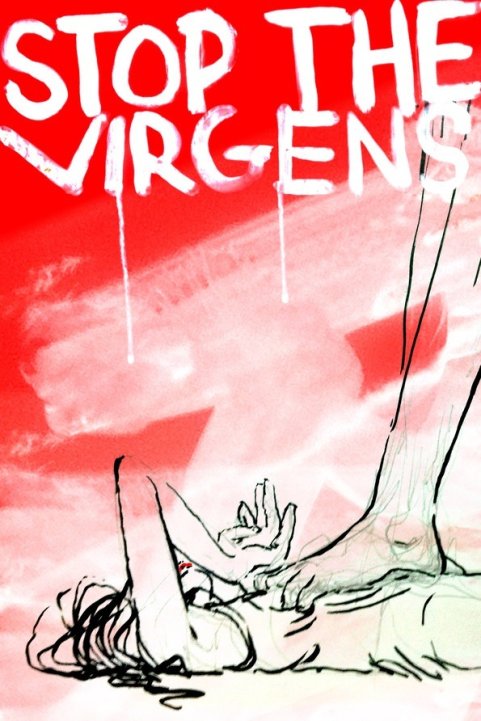
Stop the Virgens - Impressions of Karen O's Opera


I am not a reviewer I am a musician. And it was as a musician that I went to see Karen O's new opera "Stop the Virgens" that debuted last night at St. Ann's Warehouse. Anyone who is taking non-mainstream popular music and putting it in a theatrical setting has my attention and I applaud the work for walking that very tricky and unfriendly territory.

The biggest critique that I anticipate hearing about StV is that it isn't in fact an opera. I happen to think that whether or not this is the case has little bearing on its value as a work of performance, but the question still looms. I looked up the word opera after coming home from the performance (which is already 1 point on the board for Karen O) and I found this:

1. a drama set to music and made up of vocal pieces with orchestral accompaniment and orchestral overtures and interludes. (source)

For the most part the piece lives up to this broad definition. For all intents and purposes StV is a staged concept album, but I'm sure no marketing department would ever agree to call it that. So in short: Who cares if it's an opera? For me the music didn't tell the story, but I didn't need it to. The bodies lights and costumes did tell a story in their own fragmented and psychedelic way. But the lack of substantial connective tissue between the narrative and the music is why it really didn't feel much like an opera. But I happen to think music does better in theater as extra-dimensional to the story. So it didn't bother me. The music seemed to draw its own emotional plot in parallel.

Here are some things I noticed while watching...

1. It felt more like a 70 minute live music video than anything else. And isn't the music video the most viable and popular dramatization of music for our time?

2. The piece was about virginity, innocence, being devoured, corrupted, commodified, abused, cannibalized. And then ultimately about drinking the kool-aid. It wasn't offering any help or advice. It was just trying to draw you in and remind you of these traumas.

3. It is no longer enough to make an album. That is too easy and commonplace. A new metric for a musician is the visual and performative language they employ.

4. There were two main characters in this opera: Karen O's voice and Karen O's costumes.

5. The outlandish costumes will be inevitably compared to Lady Gaga and even Bjork. I have nothing else to say about fashion.

6. There were about 30 chorus members (presumably the virgins). They were all young females in chalky white makeup, choppy white wigs and what looked like cut up white graduation gowns. 7 Dancer/Chorus members who writhed and cavorted for most of the piece and then two Dark Queen archetypes who lorded over the "virgens."

7. There was a suprising doo-wop feeling to much of the music which came through when the 30 chorus members were all oohing and ahhing. (there was even a 6/8 ballad)

8. I was struck by how few people I saw taking photos, texting or tweeting. That was what made it really not feel like a rock concert. (this was by decree of the theater)

9. One of the most compelling moments was when Karen O's voice cracked ever so slightly towards the end of the show. This and the curtain call were the only moments where some of her endearing vulnerability peeked out from behind her carefully crafted ice virgin/mother/queen/angel character.

10. I missed Brian Chase's drum set playing. He mostly played tambourine and snare drum.

11. Even though there were close to 50 performers on stage Karen O sang the lead vocal part on every song. This made it really feel like a Karen O concert and not an opera.

12. Karen O's voice was exquisite, the vocal arrangements in the chorus were elegant and the momentary cacophonies were pretty interesting. Most interesting was the beginning when the chorus members are all singing antiphonally. Admittedly I'm a sucker for big groups of singers using their voices as texture and singing off mic.

13. I just read in Scott Miller's history of musical theater that he thinks rock music is too repetitive and lacking in complexity to work well as a conduit for high drama. Perhaps concert music isn't repetitive, distorted and overstimulating enough to reflect the changing architecture of our brains in the information age. There was drama happening in this piece. It was just going on in relationship to its own particular form. If you looked for plot and character where you typically find them in opera or musical theater you might've left sorely disappointed. If you looked for the story in the dusty faces of the chorus members wandering through the audience or in the layered fabrics of the costumes you might find something to hang onto.

14. I'm happy that she took the chance on doing this show even though she might have to bear the slings and arrows of the skeptical. People get mad when you take a great big label like opera and bend it to your will.

10.09.2011

Cumberland Gap


I found this song in an old Pete Seeger songbook that belonged to my Dad. I love how the shape of the melody mirrors the topography of a valley. I rewrote some of the words and added a bridge so that it would fit into my musical, which coincidentally is set right near the Cumberland Gap in and around Whythe County, VA.


IMAGE CREDIT: Hunt, S. V. D. (Samuel Valentine), engraver. “Cumberland Gap,” 1872. Prints and Photographs Division, Library of Congress. Reproduction Number LC-USZ62-52628

10.04.2011

3 2's or AFAR by Mac Wellman (The Devil's Butthole)


I've been collaborating on a piece with Mac Wellman and director Meghan Finn. This has been a wild ride. Part japanese tinged puppet theater, part philosophical absurdist performance art, and then I added the childlike musical theater earnestness.

Devil's Butthole (DEMO) by musicisfreenow

"His script is a meditation on Heidegger’s Dialogue on Language Between a Japanese and an Inquirer. The Japanese philosopher in the dialogue, named Kuki Shūzō, spoke and wrote about iki, the concept of coquetry which influences Japanese culture on many things from architecture to the clothing of geishas. 'It’s basically teasing, like parallel lines that never meet,' Wellman says. 'It’s not about consummating anything, it’s about always maintaining that type of tension.' "
From an article in the Brooklyn Rail about the piece.

The play opens October 6 at Dixon Place.

UPDATE: New York Times Review

9.08.2010

The Musical as Drama


So I just finished Scott McMillin's very amazing book, The Musical as Drama, on what was my first venture into a critical analysis of musical theater. One of McMillin's main points is that musicals have a subversive multiplicity to them because they operate on two orders of time: number time and book time. Which is to say that the time that passes during song is almost like a parallel dimension to the narrative action of the book. He emphasizes that, because of these two orders of time, the characters in musicals necessarily "double" themselves, and become two separate versions. This doubling uniquely enables a multiplicity and a sort of Brechtian alienation from a singular dramatic momentum.

"There is always a bit of cheek in the musical's revision of its sources." p. 52

"The heart of the musical is the projection of musical ability, which takes the performers into the second order of time, lyric time, and lets them extend their characters musically....The larger characters are capable of living in two worlds as though they were real and normal...They aren't, but we are glad to think they are" p.67

He says that the old imperative for an "integration" of the book and music is really a red herring, and that "coherence" is a better suited term for the form.

"Integration means the blending of difference into similarity...Coherence means things stick together, different things, without losing their difference. Most musicals are not political, but all musicals depend on conventions that translate into political terms. The political implication comes from the conventions of the musical itself, which establish a groundwork of doubled time and character, source stories reformulated into the routines of the show business, raids on private motives, most of us keep to ourselves in normal life, a delight in throwing authority off balance, and a desire to maintain song-and-dance formats that go back to Harlem and the Lower East Side. It is an illegitimate drama that disturbs the managers of our affairs the more it remains true to its roots in popular entertainment. Its aesthetic is radical, and that means its political potential is always there, as a matter of form. " p. 209

"I think the new shows will have what we have been talking about: a power of reflection running between the different modes of book and number, a sense of the irreverence of the genre, and a feeling for the anger and beauty of radical multiplicity." p. 211

I hope so!


"The Musical as Drama"
by Scott McMillin
2006 Princeton University Press