Showing posts with label #newmusical. Show all posts

9.26.2017

Musical Theatre of the Future

In February 2017 I went to Norway to talk to experimental LARP designers about making a participatory space musical. I got to share a lot of my beliefs about musicals, participatory theater and transforming the civic sphere with art. You can watch:


Watch it on YouTube
Also check out Lizzie Stark's primer on Nordic Larp HERE.

7.16.2013

The Universe is a Small Hat - 1st Play Test

Engineering meaningful participatory theater.

Photos by Nora Mericicki from the Berkeley Rep Ground Floor workshop/playtest June 21, 2013. 
The Witness Training. Safiya Fredericks (background) as The Founder and audience member/colonist Melissa Nigro


During my time in The Civilians R and D Group and the Berkeley Rep Ground Floor Program I have been studying how to turn the experience of my musical into an immersive and interactive game. My piece is entitled The Universe is a Small Hat and tells the story of a techno-Utopian space colony which encounters a mysterious non-human atmospheric intelligence. Each audience member plays the role of a colonist and has to choose how to behave and interface within the micro-society on the ship. The decisions that colonists make influence their experience of the piece, opportunities they have, their access to the ship itself, and ultimately the ending that they experience.

A Song from the show:


“A game is an experience created by rules.” - Anna Anthropy (Rise of The Videogame Zinesters)

Games are systems and so they are well-suited to tell stories about systems. Small Hat is at its core about a society, which is a network of shared laws, customs, and/or organizations. My piece also deals with physics which is a system of laws capable of describing and predicting aspects of our Universe. The idea for turning my piece into an immersive experience first came from this video of futurist Jason Silva talking about his experience of Punchdrunk's Sleep No More

When I found the Jason Silva video I was trying to figure out how to tell a futuristic story in a theatrical context, but I feared that being conventionally presentational would come off as hokey. My sense is that science fiction has a bad reputation in theater. Perhaps science fiction works better in novels and films because both forms are so good at immersing us in a fictional future. Silva connects Sleep No More to virtual reality and frames its (albeit analog) interactive environment as an evolution of the video game and “the future of storytelling.” I think he has a point. For centuries theater has served to create a moment of physical rest and reflection after a day of labor. But now, as more jobs than ever require hours of isolation sitting in front of a screen, plugged into a network, theater might be well positioned as a place to engage our bodies, and allow us to interact with one another in physical space. George Lucas recently came out with a similar point in his Times article The Future of Movies

The Healer Training
"Games are a kind of theater in which the audience is an actor and takes on a role – and experiences the circumstances and consequences of that role.”  - Anna Anthropy

Below I've presented some game concepts alongside a few thoughts on how we are integrating the concepts into The Universe is a Small Hat. The words that game designers use to describe their work have been helpful as I try to merge these two worlds. My hope is that more theater artists will start creating work that generates story-driven interactivity. In the two large playtests we've done I've found an incredible willingness on the part of audiences to participate as long as the system makes some sense to them.

Player Character - is a character in a video game or role playing game who is controlled or controllable by a player, and is typically a protagonist of the story told in the course of the game.
In Small Hat the “player” is the audience member. And as I develop the “script” I am viewing the audience member as an actor in the play. The script should be a delineation of circumstances that allow for a mediated experience full of sensation, story and choice. The audience members will not be asked to “act” or play a character other than themselves. Since they are cast as members of the space colony we are asking them to be themselves exactly as they are, or as they'd like to be. Each colonist is given one of five “identities,” or jobs, based on an evaluation, but each individual can embrace, switch, or reject the identity as they see fit.

Non-Player Character - any character not controlled by a player. In our case, the actors.

Reward - The reward is the positive consequence of conquering the challenge; it can be anything from an increase in score, new items, or a scene.

The Bluelight


Risk - a situation involving exposure to danger, or in the case of a game, the loss of points, rewards, or status.

Cutscenes - A cutscene is a sequence in a video game over which the player has no or only limited control, breaking up the gameplay. Cutscenes are used to advance the plot, strengthen the main character's development, introduce enemy characters, and provide background information, atmosphere, dialogue, and clues.The video game form of scene/gameplay/scene/gameplay reminds me of the musical theater form of scene/song/scene/song. In Small Hat we will move the narrative primarily through songs, direct address, and gameplay, with few scripted scenes between characters. The colonists also have a lot of time to interact directly with the drones, in which case the drones will be improvising based on their understanding of the world.

The Belief Ladder

Items – Objects which play role in the story. The might contain clues, unlock elements of the story, offer powers or privileges.

Score - In games, score refers to an abstract quantity associated with a player or team. Score is usually measured in the abstract unit of points, and events in the game can raise or lower the score of different parties. Most games with score use it as a quantitative indicator of success in the game, and in competitive games, a goal is often made of attaining a better score than one's opponents in order to win.

Playtesting – This is an idea in games that you have to play the game in order to gauge its effectiveness. Is it challenging? Too repetitive? Too easy? Interesting to both expert players and novices? Factors of the game can be tweaked and adjusted according the to subjective experience of the playtesting. I thought playtesting is the game design version of workshopping in theater, but I've actually discovered it is more analogous to rehearsal. We actually need the players (audience) to see even the most basic elements of the piece on their feet.

Skill and Chance – This is a polarity that is present in many games. There is a randomizing element (dice or cards) but also a system of rules which can be employed though a player's skill. Specific strategies will allow Colonists to achieve higher and reach greater depths of the world. But the randomizing elements will add unexpected outcomes.

Level - In a video game a level is the total space available to the player during the course of completing a discrete objective.

Audience members fill out exit surveys after the playtest.


César Alvarez - Creator/Composer
Sarah Benson - Director
Ivan Safrin and Syed Salahuddin - Game Designers

For more information on the The Universe is a Small Hat tweet or contact César.

5.14.2013

Natasha, Pierre and The Great Comet of 1812

14 Reasons I Love Dave Malloy's Opera based on War and Peace.
Phillipa Soo as Natasha in NATASHA PIERRE AND THE GREAT COMET OF 1812, Photo By Chad Batka
  1. You get perogies and vodka.

  2. Dave uses bass clarinet, english horn, and gut rumbling club music all in the same piece.

  3. One scene inside of the opera is a hilarious parody of an opera.

  4. A bunch of the actors, and almost all of the musicians, are also composers.

  5. At one point two female singers in a tense situation sing the lyric “constraaaaaaained” a half step away from each other, and it is beautiful.

  6. One of the actors passed me a tiny folded paper during the show that had “you are hawt” scrawled on it. (Data suggests this was part of the show, and not an impulsive appraisal of my hawtness).

  7. Dave's melodies pour from the piece so effortlessly. I waited for something to be repetitive or predictable but each musical moment is an ingenious transformation and/or departure from the previous.

  8. The opening number is a cumulative song

  9. Mimi Lien created a magical Russian Cabaret.

  10. I'm incredibly impressed that Dave could tell such a complicated story using no spoken dialogue, without the exposition ever feeling forced. This makes me hopeful about the potential of song to tell big stories in an authentic and light-hearted way. It cleverly triangulates musical theater and operatic tropes so it can make use of them, without ever being subsumed by them.

  11. Every one of the actors approach singing differently. I love this. I like shows that have a few classically trained singers and a bunch of singers that are using their voices with folk, blues, rock, and experimental sensibilities. The sonic patchwork is what makes the piece feel current and authentic. Our culture is so heterogeneous that when a large group of performers stand up and sing according to a single musical orthodoxy, the product can feel institutional, dated or even corporate. This is the experience I have, though not always an unpleasant one, at many Broadway shows and big budget operas. Comet on the other hand feels homemade. It may not feel as homemade in its current commercial incarnation than it did at Ars Nova, but that leads to my next point.

  12. I love seeing a commercial production of a truly downtown piece or performance. Rachel Chavkin and Dave have kept the core of the work intact even though there are now many more costumes and chandeliers. To quote the brilliant Taylor Mac, “The avant-garde IS commercial!” It is inspiring to see commercial backing for a work as quirky, honest and courageous as Comet.

  13. The waitstaff are all actually Russian (or have convincing accents), and I think this actually adds a lot to the experience.

  14. It's in a damn TENT!

    Go see for yourself.


2.03.2013

The Good Person of Szechwan

It's been an absolute revelation working with the cast and creative team on this show. I wrote 7 songs for the production and the other members of the Lisps will be on stage rocking every night. Here's a demo/download of one of my songs from the show:


La MaMa presents the Foundry Theatre production of 
Bertolt Brecht's The Good Person of Szechwan.
Directed by Lear deBessonet
Featuring Taylor Mac
Music by César Alvarez with The Lisps

New York Times REVIEW

WEBSITE

Dates: Feb 1st - 24th, 2013
LaMama's Ellen Stewart Theatre 66 East 4th Street
NYC (between 2nd Ave & Bowery)
Tickets: ONLINE /// or call: 212.475.7710


12.01.2011

27 Cast Albums, Six Words Each


I listened to all of these cast albums in about a month. Here's a 6-word observation about each one.

1. Sweeney Todd - (Angela Lansbury, Len Cariou) - This musical is a masterpiece. Period.

2. Sweeney Todd - (Michael Cerveris, Patti LuPone) - Stripping it down is often best.

3. Urinetown - Songs should approach narrative more obliquely.

4. Avenue Q - The most obvious things are hilarious.

5. Showboat - I'm glad musicals aren't operatic still. (or) I'm glad Showboat invented the musical.

6. Oklahoma - Local colloquialisms in song depict place.

7. You're a Good Man Charlie Brown - Lack of vibrato represents innocence/youth.

8. Rocky Horror Picture Show - Don't be so wussy about campiness.

9. West Side Story - Melodic movement and rhythm encode emotion.

10. Follies - Musical is perfect form for nostalgia.

11. On a Clear Day You Can See Forever - I love songs about past lives.

12. Guys and Dolls - American slang is a gold mine.

13. Crazy for You - Gershwin songs shine in any context.

14. Rent - Distended vowels can ruin rock songs.

15. Company - Sondheim loves sixteenths. I do too.

16. Hair - The tape distortion is just shocking!

17. A Funny Thing Happened on the Way to the Forum - Worth it for the first song.

18. Into the Woods - Every melody has its own meaning.

19. The Fantasticks - Piano centered score's not my favorite.

20. Annie - Little girls sound amazing singing loud.

21. In the Heights - Salsa's built-in momentum suits the form.

22. Carousel - In heaven there will be reverb.

23. Fiddler on the Roof - Aspiration's the best inspiration for song

24. How to Succeed in Business Without Really Trying - Highlighting the worst in us all.

25. A Chorus Line - Musical theater about musical theater works.

26. Cabaret (Alan Cumming) - Brilliant formal construct. Diegetic is best.

27. Godspell - Just can't get into Jesus musicals.

I listened to the Original Broadway (or definitive) Cast Recording except where noted.

11.28.2011

This Machine Creates Peace

FUTURITY at HERE by Sam Hough

Dear Friends, Family, and Readers,

Since 2007 I've been working on a musical called FUTURITY. Some of you have seen it and many of you have heard me yammering on about it. In a few months it will World Premiere and run for 5 weeks at American Repertory Theater in Cambridge, MA. This is a HUMUNGOUS deal for me, my band, and everyone that's been working on the project all these years.

The musical is about a soldier in the Civil War who tries to invent a steam-powered mechanical brain, which, through its great intelligence, can solve all of humanities problems. The most pressing of these problems, from his perspective, is war itself. In the musical he proposes to invent a "Machine that creates peace." The central question of the piece is whether or not our imaginations can ultimately devise a more humane and peaceful society. It calls into question the role that we all have in designing the future we will inhabit. I think, and hope, that all of our imaginations working together could create a better and more peaceful world than we have now. And I hope that this musical helps to enliven that conversation.

We are currently in the process of recording all of the music I've written for the show (17 songs) into an album that will be pressed to Vinyl and CD. If you are interested in the the piece and would like to support us you can pre-order the album HERE. It is HUGELY helpful to pre-order because otherwise the entire bill for recording and pressing gets put on credit (boo). And just fifteen bucks gets you the album!

Follow the link to watch the Official Trailer and Pre-order: http://www.kickstarter.com/projects/thelisps/futurity-the-album

Thanks so much for reading. I hope you are well and I'd love to hear from you all.
Hugs and kisses,
César

11.11.2011

List of Sci-Fi Musicals, Operas and Plays

photo of Via Galactica by John Michael Cox
Musicals:
Rocky Horror Show by Richard O'Brien (1972)
Via Galactica by Christopher Gore, Judith Ross and Galt MacDermot (1972)
Time by Dave Clark, David Soames, Jeff Daniels, and David Pomeranz (1986)
Starmites by Barry Keating and Stuart Ross (1987)
Return to the Forbidden Planet by Bob Carlton (1989)
Metropolis by Joe Brooks and Dusty Hughes (1989/2002)
Superbia by Jonathan Larson (1989)
Weird Romance by Alan Menken with David Spencer and Alan Brennert (1992)
Saucy Jack and the Space Vixens by Charlotte Mann, Michael Cridler, Jonathan Croose and Robert Forrest (1995)
Escape from Pterodactyl Island by Peter Charles Morris, Michael Jeffrey and Phillip George (1999)
Area 51 by Noel Katz and Tom Carrozza (2000)
Chitty Chitty Bang Bang by Richard and Robert Sherman and Jeremy Sams (2002)
We Will Rock You by Ben Elton, Brian May and Roger Taylor (2002)
The Last Starfighter by Skip Kennon and Fred Landau (2004)
The Brain from Planet X by David Wechter and Bruce Kimmel (2006)
Futurity by The Lisps, César Alvarez and Molly Rice (2012)

Operas:
Repo! The Genetic Opera (Original Stage Version) by Darren Smith and Terrance Zdunich (2002)
Death and the Powers: A Robot Opera by Todd Machover (2010)

Plays:
R.U.R. (Rossum's Universal Robots) by Karel Capek (1921)
Back to Methuselah by George Bernard Shaw (1921)
Unseen Hand by Sam Shepard (1969)
Illuminatus! Trilogy adpated by Ken Campbell (1976)
Martian Chronicles by Ray Bradbury (1977)
The Warp (22 Hour Play) by Neil Oram (1978)
Starstruck by Elaine Lee, Susan Norfleet Lee and Dale Place (1980)
Lunacy by Patricia Weaver Francisco (1984)
Henceforward... by Alan Ayckbourn (1987)
Comic Potential by Alan Ayckbourn (1988)
Darkside by Ken Jones (1988)
Dirk adapted by James Goss and Arvind Ethan David (1995)
A Number by Caryl Churchill (2004)
D is for Dog by Katie Polebaum, Sean T. Cawelti and Rogue Artists Ensemble (2004)
Coyote Trilogy by Don Elwell (2006)
Boom by Peter Sinn Nachtreib (2008)
Untitled Mars by Jay Scheib (2008)
Space//Space by Banana Bag and Bodice (2009)
Godlight Theatre Company's adaptations of 1984, Farenheit 451, A Clockwork Orange, and Slaughterhouse 5  (1994-2009)
What We Once Felt by Anne Marie Healy (2009)
Bellona: Destroyer of Cities by Jay Scheib (2010)
The North Plan by Jason Wells (2010)
Baby Universe: A Puppet Odyssey by Wakka Wakka (2010)
Futura by Jordan Harrison (2010)
The Annihilation Point by Berserker Residents (2010)
Samuel and Alasdair: A Personal History of the Robot War by Mad Ones (2010)
Galactic Girl by Jon Hoche (2011)
The Hallway Trilogy Part Three: Nursing by Adam Rapp (2011)
How to live Safely in a Science Fiction Universe adapted by Matt Slaybaugh and Jennifer Fawcett (2011)
Do Androids Dream of Electric Sheep? adapted by Untitled Theater Company 61 (2011)
Frankenstein by Nick Dear (2011)
World of Wires by Jay Scheib (2012)

This is by no means a complete list, just a sample based on some basic internet research. These are works which as far as I can tell have been published, or had at least one full production/run at a regional or off-broadway theater. (there are a few that were off-off Broadway). I left off plays which are closer to the genre of horror, fantasy, or which deal primarily in the super-natural (eg Little Shop of Horrors, Spider Man, etc.) I don't have anything against horror, fantasy, or comic book genres they are just not what I'm currently investigating. If you know of other works that fit the criteria please post in the comments. I will try and update.

Here is the definition of Science Fiction I am using (from Wikipedia):
Science fiction is a genre of fiction dealing with imaginary that is more or less plausible (or at least non-supernatural) content such as future settings, futuristic science and technology, space travel, aliens, and paranormal abilities. Exploring the consequences of scientific innovations is one purpose of science fiction...Science fiction is largely based on writing rationally about alternative possible worlds or futures. It is similar to, but differs from fantasy in that, within the context of the story, its imaginary elements are largely possible within scientifically established or scientifically postulated laws of nature (though some elements in a story might still be pure imaginative speculation).
 tweet me @musicisfreenow

10.13.2011

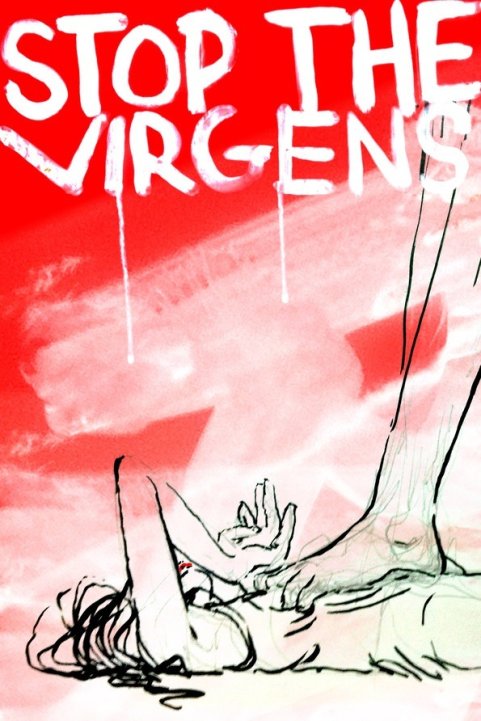
Stop the Virgens - Impressions of Karen O's Opera


I am not a reviewer I am a musician. And it was as a musician that I went to see Karen O's new opera "Stop the Virgens" that debuted last night at St. Ann's Warehouse. Anyone who is taking non-mainstream popular music and putting it in a theatrical setting has my attention and I applaud the work for walking that very tricky and unfriendly territory.

The biggest critique that I anticipate hearing about StV is that it isn't in fact an opera. I happen to think that whether or not this is the case has little bearing on its value as a work of performance, but the question still looms. I looked up the word opera after coming home from the performance (which is already 1 point on the board for Karen O) and I found this:

1. a drama set to music and made up of vocal pieces with orchestral accompaniment and orchestral overtures and interludes. (source)

For the most part the piece lives up to this broad definition. For all intents and purposes StV is a staged concept album, but I'm sure no marketing department would ever agree to call it that. So in short: Who cares if it's an opera? For me the music didn't tell the story, but I didn't need it to. The bodies lights and costumes did tell a story in their own fragmented and psychedelic way. But the lack of substantial connective tissue between the narrative and the music is why it really didn't feel much like an opera. But I happen to think music does better in theater as extra-dimensional to the story. So it didn't bother me. The music seemed to draw its own emotional plot in parallel.

Here are some things I noticed while watching...

1. It felt more like a 70 minute live music video than anything else. And isn't the music video the most viable and popular dramatization of music for our time?

2. The piece was about virginity, innocence, being devoured, corrupted, commodified, abused, cannibalized. And then ultimately about drinking the kool-aid. It wasn't offering any help or advice. It was just trying to draw you in and remind you of these traumas.

3. It is no longer enough to make an album. That is too easy and commonplace. A new metric for a musician is the visual and performative language they employ.

4. There were two main characters in this opera: Karen O's voice and Karen O's costumes.

5. The outlandish costumes will be inevitably compared to Lady Gaga and even Bjork. I have nothing else to say about fashion.

6. There were about 30 chorus members (presumably the virgins). They were all young females in chalky white makeup, choppy white wigs and what looked like cut up white graduation gowns. 7 Dancer/Chorus members who writhed and cavorted for most of the piece and then two Dark Queen archetypes who lorded over the "virgens."

7. There was a suprising doo-wop feeling to much of the music which came through when the 30 chorus members were all oohing and ahhing. (there was even a 6/8 ballad)

8. I was struck by how few people I saw taking photos, texting or tweeting. That was what made it really not feel like a rock concert. (this was by decree of the theater)

9. One of the most compelling moments was when Karen O's voice cracked ever so slightly towards the end of the show. This and the curtain call were the only moments where some of her endearing vulnerability peeked out from behind her carefully crafted ice virgin/mother/queen/angel character.

10. I missed Brian Chase's drum set playing. He mostly played tambourine and snare drum.

11. Even though there were close to 50 performers on stage Karen O sang the lead vocal part on every song. This made it really feel like a Karen O concert and not an opera.

12. Karen O's voice was exquisite, the vocal arrangements in the chorus were elegant and the momentary cacophonies were pretty interesting. Most interesting was the beginning when the chorus members are all singing antiphonally. Admittedly I'm a sucker for big groups of singers using their voices as texture and singing off mic.

13. I just read in Scott Miller's history of musical theater that he thinks rock music is too repetitive and lacking in complexity to work well as a conduit for high drama. Perhaps concert music isn't repetitive, distorted and overstimulating enough to reflect the changing architecture of our brains in the information age. There was drama happening in this piece. It was just going on in relationship to its own particular form. If you looked for plot and character where you typically find them in opera or musical theater you might've left sorely disappointed. If you looked for the story in the dusty faces of the chorus members wandering through the audience or in the layered fabrics of the costumes you might find something to hang onto.

14. I'm happy that she took the chance on doing this show even though she might have to bear the slings and arrows of the skeptical. People get mad when you take a great big label like opera and bend it to your will.

10.09.2011

Cumberland Gap


I found this song in an old Pete Seeger songbook that belonged to my Dad. I love how the shape of the melody mirrors the topography of a valley. I rewrote some of the words and added a bridge so that it would fit into my musical, which coincidentally is set right near the Cumberland Gap in and around Whythe County, VA.


IMAGE CREDIT: Hunt, S. V. D. (Samuel Valentine), engraver. “Cumberland Gap,” 1872. Prints and Photographs Division, Library of Congress. Reproduction Number LC-USZ62-52628

10.04.2011

3 2's or AFAR by Mac Wellman (The Devil's Butthole)


I've been collaborating on a piece with Mac Wellman and director Meghan Finn. This has been a wild ride. Part japanese tinged puppet theater, part philosophical absurdist performance art, and then I added the childlike musical theater earnestness.

Devil's Butthole (DEMO) by musicisfreenow

"His script is a meditation on Heidegger’s Dialogue on Language Between a Japanese and an Inquirer. The Japanese philosopher in the dialogue, named Kuki Shūzō, spoke and wrote about iki, the concept of coquetry which influences Japanese culture on many things from architecture to the clothing of geishas. 'It’s basically teasing, like parallel lines that never meet,' Wellman says. 'It’s not about consummating anything, it’s about always maintaining that type of tension.' "
From an article in the Brooklyn Rail about the piece.

The play opens October 6 at Dixon Place.

UPDATE: New York Times Review

10.01.2010

Interview with Molly Rice

Reposted from Adam Szymkowski's Blog. This is a nice interview with FUTURITY Collaborator and spiritual super-genius Molly Rice


Molly Rice

Hometown: Born in Houston, TX, but Austin is home.

Current Town: New York City

Q: Tell me about the Saints Tour and Futurity the Musical.

A: SAINTS TOUR means a lot to me. I wrote the play in 2009 for Ray Rizzo's live arts exchange MOTHERLODGE, to take place in Louisville, KY. The play was a bus tour, led by a "Tour Guide" character who uncovers the secret saints of a local area. I wrote it using Google Maps Street View, never having been to Louisville, and Ray connected me to local musicians willing to be planted around the city for audiences to discover. Actress Emily Hyberger (a Louisville native), director/ writer/ actor Marc Bovino, and I went down and put the thing together in a week. And it was just magical. We had local sax player Mauriece echoing through the Salvation Army's cavernous 1950's gymnasium, and Louisville singer/ songwriter Tyrone Cotton singing about time in a graveyard, showered by white cherry blossoms, and so many other magical Louisville moments. We enlisted the Center of Hope Soup Kitchen, where the tour ended and we all ate a meal together. It was Community Theater, in the deepest sense of the word. I wrote it to be redesign-able for production in different communities, each time using a local actor and musicians, local sites, and a local community service organization-- so this Spring director Rachel Chavkin and I tested its flexibility in the West Village as a walking tour, with Taylor Mac as the Tour Guide and 20 participating artists and musicians (!!!). Totally different-- the Village itself was a character-- but totally interesting to see its translation. I plan to do it in as many cities as I can. The play is a story, but also a sort of frame to showcase these rich little pockets of culture out there that we sometimes lose sight of in New York. And as a writer, the sites just unfold into stories in the most exciting way.

FUTURITY is a beautiful example of a contemporary music/ theater hybrid. It was conceived and developed by the Lisps, a strange, smart Brooklyn band who I'd never heard of. I went and saw a presentation of FUTURITY at Joe's Pub in Spring 2009 because somebody sent me an email about it and it sounded cool, and I was like, this is fascinating-- there is something special here. I was touched by the way it balanced intellectual ideas with the emotional force of music. I felt like its book might need some development and that I might be a good match, so I connected with them and joined the team. The story is about a Civil War soldier and his imaginary relationship with mathemetician/ Lord Byron's daughter Ada Lovelace, which is fascinating enough, but at root the play's about the way science and art talk to each other, push each other forward, from one era to the next. I'm thrilled to be working on it.

I love working on strange music/ theater hybrids like these two. I was into music from early on--singer/ songwriter out of high school, went to Austin for college and promptly quit to play in bands. Music and story cleave to each other in my brain-- they're never fully separate strands of narrative. Even straight plays feel like compositions, and songs and compositions have a shape that feels like story. I'm interested in trying to 'braid' them in new ways, and with these two projects I'm still working it out.

Read the full interview HERE...

9.08.2010

The Musical as Drama


So I just finished Scott McMillin's very amazing book, The Musical as Drama, on what was my first venture into a critical analysis of musical theater. One of McMillin's main points is that musicals have a subversive multiplicity to them because they operate on two orders of time: number time and book time. Which is to say that the time that passes during song is almost like a parallel dimension to the narrative action of the book. He emphasizes that, because of these two orders of time, the characters in musicals necessarily "double" themselves, and become two separate versions. This doubling uniquely enables a multiplicity and a sort of Brechtian alienation from a singular dramatic momentum.

"There is always a bit of cheek in the musical's revision of its sources." p. 52

"The heart of the musical is the projection of musical ability, which takes the performers into the second order of time, lyric time, and lets them extend their characters musically....The larger characters are capable of living in two worlds as though they were real and normal...They aren't, but we are glad to think they are" p.67

He says that the old imperative for an "integration" of the book and music is really a red herring, and that "coherence" is a better suited term for the form.

"Integration means the blending of difference into similarity...Coherence means things stick together, different things, without losing their difference. Most musicals are not political, but all musicals depend on conventions that translate into political terms. The political implication comes from the conventions of the musical itself, which establish a groundwork of doubled time and character, source stories reformulated into the routines of the show business, raids on private motives, most of us keep to ourselves in normal life, a delight in throwing authority off balance, and a desire to maintain song-and-dance formats that go back to Harlem and the Lower East Side. It is an illegitimate drama that disturbs the managers of our affairs the more it remains true to its roots in popular entertainment. Its aesthetic is radical, and that means its political potential is always there, as a matter of form. " p. 209

"I think the new shows will have what we have been talking about: a power of reflection running between the different modes of book and number, a sense of the irreverence of the genre, and a feeling for the anger and beauty of radical multiplicity." p. 211

I hope so!


"The Musical as Drama"
by Scott McMillin
2006 Princeton University Press

7.29.2010

The Universe is a Small Hat


Other universes can get intoxicating, but ours is the one we are stuck with.
Many universes had to be tested to arrive at this one.
The specific qualities which ensure the possibility of life are unique and hard earned.
Multiple universes had to be tried on, stretched, re-purposed, folded, printed, rolled, curled, expanded, and imploded in order to know precisely which kind of universe could establish intelligence.

So feel lucky.
You are special.

The universe is a small hat worn by an enormous reserve of energetic potential.
It is one of trillions of accessories that completes the outfit of a primordial froth.

You are in a bubble.

You are a tiny bubble in a tiny bubble in an enormous foam of eternal consequence. It is no small thing that you can witness the edges of your own known universe.
You are everywhere right now.
Changes at one insignificant point can affect distant parts of the universe.
Your wave function extends into every known and unknown crevice of creation.
This is "Spooky action at a distance," and it is everything we have.
Try to appreciate it.

The fact of your existence has the same the likelihood of a laser telescope being assembled out of a pile of sand and a brisk wind. You are a small feat. You are deeply improbable.

Perhaps that is why so many of us are unhappy. Our sheer improbability is in a constant struggle against entropy. From day one we are forced to resist the Universe's desire to pull us apart and return us to non-existence.

It's hard to be an organized assembly of particles.


(Let's try to assemble a small neutron star out of metal parts.
That's the best way to keep ourselves afloat.)

7.27.2010

Music Is Science Fiction: An Interview With The Lisps

Reposted from LightSpeed Magazine
by
Desirina Boskovich

the lisps in futurity

Brooklyn-based band The Lisps definitely bring a unique element to New York’s indie rock scene. Quirky performances and eclectic sounds, influenced by folk and bluegrass, lend playful charm to lyrics-driven songs that are cerebral and wistful by turns. Their first full-length album, Country Doctor Museum, was released in 2008, following a debut EP titled The Vain, the Modest and the Dead. And, as far as we know, they’re the first indie rock band to write and produce an original, steampunk musical fusing science fiction, experimental music, and the Civil War.

FUTURITY follows the wartime experience of aspiring science fiction writer and lowly Confederate solider Julian Munro. While surrounded by destruction, Julian strikes up a correspondence with real-life metaphysician Ada Lovelace, history’s first female computer programmer. Together, the idealistic pair imagine a utopian future defined by an omnipotent machine that will end war once and for all.

Sammy Tunis and César Alvarez of The Lisps play the roles of Ada Lovelace and Julian Munro, backed by Lisps’ drummer Eric Farber. The play was written by Alvarez, and staged with the help of theatrical collaborators, as well as financial contributions from their fans, raised via Kickstarter.

Over the past two weeks, I’ve exchanged several e-mails with The Lisps. In the interview that follows, we touch on topics such as self-help songs, The Difference Engine, string theory, and, of course, The Singularity.

#

Desirina Boskovich: Broad question: what was the genesis for FUTURITY? What inspired your interest in Civil War history? Can you talk about the writing process for the musical?

César Alvarez: The idea for a concept album about a civil war soldier who was a science fiction writer literally just popped into my head while I was driving through Virginia in the fall of 2007. I held onto the idea for a while and then started working on it for my master’s thesis performance at Bard the following spring. The idea quickly turned into a musical. …[As] I started writing in this completely new form, I had no idea what I was doing. The early drafts of FUTURITY are bizarre lists and haiku-like texts. It has come a long way. The writing process has really been defined by the productions. If you count my thesis presentation at Bard, we’ve performed FUTURITY with four different casts in five different places. Each time we put the piece up the show is transformed, songs are added, characters developed, major plot points are changed, etc.

DB: When you first began working on the project, did you conceive it as a “steampunk” piece, or is that a term that came along as the project evolved?

CA: Definitely not. It is an aesthetic that we’ve used to our advantage but we didn’t want to define ourselves that way because it seemed limiting. William Gibson and Bruce Sterling’s novel The Difference Engine is something I read during my research period which was hugely influential, and I’m pretty sure it was that book that introduced me to the historical figure of Ada Lovelace. Also, Julian’s world is very rustic and messy, not the brass-encrusted fantasy of steampunk. So in Julian’s fantasy world, we like that his machine is made from rusty and dilapidated parts because that’s what his experience is.

DB: What were your aesthetic influences for the set design?

CA: The wonderful artist, and my soon-to-be wife, Emily Orling, did the set design. She is a visual artist and not a set designer and so she brought an atypical approach, I think. Her concept for the design was to use found and re-purposed objects as the raw material for the world. So there was very little in the way of set pieces, and scenery. Everything was a real object folded into an imaginary context. A lot of the drum set/Steam Brain was built by Eric Farber, our drummer. Pretty much everything that he used as percussion was something he found on E-Bay or in junk stores and then mounted to be part of his instrument. … Part of what we were doing was to create a science-fictional work out of things that a civil war soldier might see around him… Ada’s world was made from those kinds of materials, and even the natural landscape started to become mechanized and industrialized, but in an 1860’s sort of way. We also relish some choice anachronisms, and in no aspect of FUTURITY are we overly pious about any time period or historical narrative.

DB: One thing I loved about FUTURITY was the sensitive and sophisticated portrayal of Ada Lovelace, especially since the role of the female inventor is often overlooked in history and under-explored in science fiction. What inspired your interest in Lovelace, and how did you research her character?

CA: I first heard about Ada in The Difference Engine, and I was at the time really searching for how Sammy’s character was going to fit into the piece. Since this was supposed to be a musical for our band I needed both Sammy and I to have pivotal characters. Ada became the perfect link into the history of computing and such a great mentor/idol/muse for Julian. Their worlds couldn’t be more different and their relationship was so improbable that it was exciting territory. In earlier versions, Ada was imagined totally by Julian, but we found that her role had much more power if we made her real and invested in Julian.

the lisps in futurity 2

DB: César, in a letter to your fans about FUTURITY, you wrote: “I like to think of music as a form of Utopianism. For me, Music is science fiction.” Could you expand upon that?

CA: I like to think about string theory, wherein the entirety of the universe is made up of infinitesimal vibrating strings. Music is the perfect metaphor for the way the universe is built. Musicians create physical organization through pure vibration. Music is also one of the earliest forms of organization. Someone banging a rock in rhythm is a very early form of civilization. Music is the “civilization” of air through the organizing properties of rhythm and harmonics. So I hold music to be one of the most important ways that humanity envisions alternative forms of organization, which, in essence, is also what science fiction does.

DB: Regarding the themes of FUTURITY, you also wrote that “a feverish drive towards innovation is what keeps us alive and what can aid in our self-destruction.” Is this what fuels your interest in The Singularity? (Follow the link to read the lyrics and hear the song.)

CA: I’m so interested in technological singularity because it seems very relevant. Future shock used to be something shared among generations. At this point, every few years you need to adjust your technological tools and mindset to understand what is happening around you. I think the discussion about tech singularity helps me understand what technology means in the context of society and it gives a frame of reference. I don’t really subscribe to any Kurzweilian orthodoxy but I do think that the discussion is really fruitful.

DB: You describe your band as “the public/performative version of all the relationships you’re struggling with.” Besides the angst and rewards of 21st-century relationships, what other themes do you explore in your songs?

Sammy Tunis: Lately the themes of our songs haves touched less on personal relationships and more on science, space, time, The Singularity, and mathematics. The songs in the musical obviously follow somewhat of a narrative having to do with the relationship between scientific innovation and imagination, technological hubris and war, artificial intelligence, fantasy, etc, but there are also some pure love songs in there, too, and a lot of folk ballads. The songs on our forthcoming album really run the gamut as far as themes. …There are a few songs I like to obnoxiously call Self-Help songs: “you should do this and that”, a song called “Try” about trying new things, and a song called “Psychological Health.” Cesar’s about to get married, so a lot of the songs were written when he was falling in love with and living with his girlfriend and fall more in the domestic/love realm…

the lisps in futurity 3

DB: SF-themed music boasts a venerable tradition, from David Bowie and Sonic Youth to the Flaming Lips and Deltron 3030, etc, etc. What are your favorite “sci-fi songs,” other than your own, obviously?

CA: My favorite sci-fi song is “Two-Slit Experiment” by Jess Segal. I was also hugely influenced by The Flaming Lips album Yoshimi Battles the Pink Robots, though you might not hear it in my music. I grew up almost exclusively listening to jazz and then came really late (in college) to most rock/pop music. I’ve probably read more sci-fi than listened to it.

DB: Besides The Difference Engine, what science fiction books and stories have been influential for you? Or maybe just fun to read?

CA: Mary Shelley’s Frankenstein was really important for FUTURITY, because it dealt with so many of the same issues and was in a pre-computer time frame. Other books I love: Neuromancer, Parable of the Talents, The Forever War, Accelerando, 2001, The Final Question. Also, I have to give credit to Betty A. Toole, who was the first to transcribe Ada’s correspondence in her book The Enchantress of Numbers. Though that is all science fact, we relied heavily on her research for FUTURITY.

#

The Lisps are currently working on the next incarnation of FUTURITY, along with a FUTURITYAre We at the Movies? is slated for release this fall. Meanwhile, Alvarez is working on his next musical: M-Brane: A Splendid Dimension, a story about string theory and two untrained astronauts on a four-year space journey. concept album for full production in 2011, and their third album, tentatively titled

To learn more about The Lisps, hear their music, and find out where and when they’re performing, visit them on Facebook and Myspace.

12.06.2009

44 Considerations for Young Composers


1. Stop listening to what everything/everyone seems to be saying.

2. Then start listening again whenever.

3. Spend lots of time doing whatever you like doing.

4. Forget about everything you learned sometimes.

5. Make music that only your cat likes.

6. Music can be the wrong place to look sometimes.

7. You are very powerful.

8. You are very tiny.

9. You are perfect.

10. You are making a difference.

11. As an experiment stop trying to do the thing that you've been expecting yourself to do.

12. If you aren't doing anything you are still a composer.

13. Don't write a score for a piece that doesn't have a score just because the grant application says you have to have a score. (You might suggest that they read Varese's "The Liberation of Sound" 1936)

14. Don't take the rhythm out of your piece because "contemporary music isn't supposed to have rhythm."

15. Don't put a pulse in your piece because you think no one will listen to it otherwise.

16. Whatever your parents think about your music is fine.

17. If your significant other won't listen to your piece all the way through it doesn't mean that he/she is not right for you.

18. Read "Noise" by Jaques Attali

19. Read "The Rest is Noise" by Alex Ross

20. Music bloggers have a disturbing appetite for live and recorded music, and you shouldn't feel like you have to keep up. In fact, just don't read them unless you really like the feeling it gives you.

21. Go to the library sometimes.

22. Listen to the city.

23. Take a walk.

24. Eat local vegetables.

25. Consider the semiotics/social impact/evolution/formal structures/psychological effects of recording technology.

26.Try to imagine that sonic art (music) is the non-linguistic expression (explanation) of an infinitude of things that happened, are happening, and that will happen.

27. Grant yourself permission to write the future of humanity's organizational efforts in all areas.

28. Work with the assumption that your music has a massive capacity to achieve transformative results.

29. Consider quantity over quality.

30. Allow yourself to keep everything and forget everything.

31. If you want to say "I hate music and I'm going to do something else" just say it.

32. If you went to a conservatory it doesn't mean that you are letting someone down if you:
a. Don't notate your music.
b. Do something different entirely
c. Put down the instrument you practiced for your entire life and only play an instrument you barely know how to play.
d. Never practice.
e. Have a healthy skepticism (disrespect) for all the crap you learned in conservatory.


33. If you didn't go to a conservatory you don't need to "go back to school" and refer to 9.

34. If you are currently in a conservatory don't take yourself so seriously, remember that you are learning inside a specific institutional dynamic (point of view), and refer to 9.

35. Specify failure. Generalize success.

36. All rejected applications are valuable gifts, the summed value of which will purchase tremendous acceptance in the future.

37. When you don't get the grant you will doubt yourself. When you get the grant you will be proud of yourself and then doubt yourself. All of that is fine.

38. Be wary of out dated and newly minted sonic and musical moralities.

39. Be wary of composers and teachers trash talking "Pop Music" if they aren't referring to specific artists or musical currents. It's entirely possible that they don't know what they are talking about.

40. Be wary of the cult of the "new."

41. Be cautious fixating on new technologies just because they are new. Consider letting your musical imagination guide you to the technology that will aid in the realization of the imagined sounds.

42. Think about what caveman music might have sounded like, and what purpose it might have served.

43. Send your music to your middle school music teacher. I bet he/she will be really happy you did.

44. Make more music. We need it.


I wrote this piece in response to Annie Gosfield's Article for the New York Times website entitled "Advice for Young Composers."

5.22.2009

A Machine That Creates Peace


Dear Friends,

The run of FUTURITY that is ending this weekend has been a really major development for my band and for me as an artist. The experience of collaborating with so many wonderful performers, designers, directors, and talented people has been an unbelievable blessing that has brought forth a really original piece of performance.

I came up with the idea for a musical about a a Civil War soldier that wants to be a science fiction writer almost two years ago. The piece started out as a goofy idea for The Lisps and has turned into a 70 minute play with 15 songs and a Cast & Crew of 18 people.

FUTURITY, at is core, is a piece about war and imagination. It's about the simultaneous human drive towards both destruction and phenomenal acts of creativity. FUTURITY is about the malleability of the past and the future. It's about the way in which a feverish drive towards innovation is what keeps us alive and what can aid in our self-destruction

I've thought for a long time that music is the opposite of war. Though I realize that music is so often used to promote war, the origins of music are in the human attempt to organize chaos (noise). Music is one of the earliest forms of civilization, and it possesses within it all the same potential for chaos and disharmony that society does.

I've tried to create a piece that speaks to the way in which I've learned to understand my life as an artist. Being a musician may sometimes feel like an exercise in futility but I know that at a fundamental level we are creating a proposal for society. A proposal for the way in which things might be organized with an eye towards community, compassion and creativity. I like to think of music as a form of Utopianism. For me, Music is science fiction.

I hope that you'll come see this piece not because you feel obligated but because we have put forth so much effort to create a piece that speaks to these ideals. We are telling the story of creativity and conflict in a time that needs so much of the former and has so much of the latter.

I hope to see you there.

Love, César

FUTURITY: A Musical by The Lisps
2 More Shows at Joe's Pub
Friday May 22 8pm
Sunday May 24th 7:30pm

www.futuritythemusical.com

Buy Tickets Here

12.02.2008